Games that pay real money meaning
A true “game that pays real money”, is simply defined as any type of digital game in which you place real cash, the end result is determined by a random-number-generating (or RNG) process, and you are paid based upon a predetermined set of rules.
This is distinctly different than placing bets on sports. Sports betting involves predicting what will occur during an outside event that is beyond control.
Games that pay real money fall into a hybrid space between a video-slot-machine and a coin-flip, albeit with better graphics. Each round within these games is completely independent of the previous round. There isn’t any “the multiplier is going to bust later” or “the chicken always lives for another five moves after losing a large wager”.
Each round is created anew.
Types of Games that play real money in Kenya
In today’s article, we will take a look at the types of games that currently exist:
Crash Games
Most likely responsible for the current “instant win” craze are Crash Games. While Aviator was likely the most well-known version of this style of gameplay, JetX, Spaceman and over a dozen nearly identical versions of this style of gameplay have been introduced. To explain the basic mechanics of this type of game is relatively easy, yet watching it grow and climb on-screen is somewhat mesmerizing: a multiplier begins at 1.0x and increases continuously on the screen – often visualized through imagery such as a plane flying upwards, a rocket blasting off, or simply an ever-climbing line — and you may cash-out at any point prior to the game crashing.
If you cash-out at 2.5x, you receive 2.5x your initial wager. If you delay too long, the round ends without reward.
Unlike a simple coin flip, the psychology behind crash games is the continuous increase in the multiplier. As additional seconds pass and the multiplier continues to rise, every passing second will appear as if free money is continuing to accumulate, which is precisely how much tension the designers want players to experience.
The crash point for each round is randomly generated by the platforms algorithms for each round individually — and importantly — has no memory. Therefore, a round that crashes at 1.02x will not cause the next round to be owed a high multiplier. The patterns you observe in a crash history graph are merely attempting to find signals in noise.
Instant Win Arcade Games
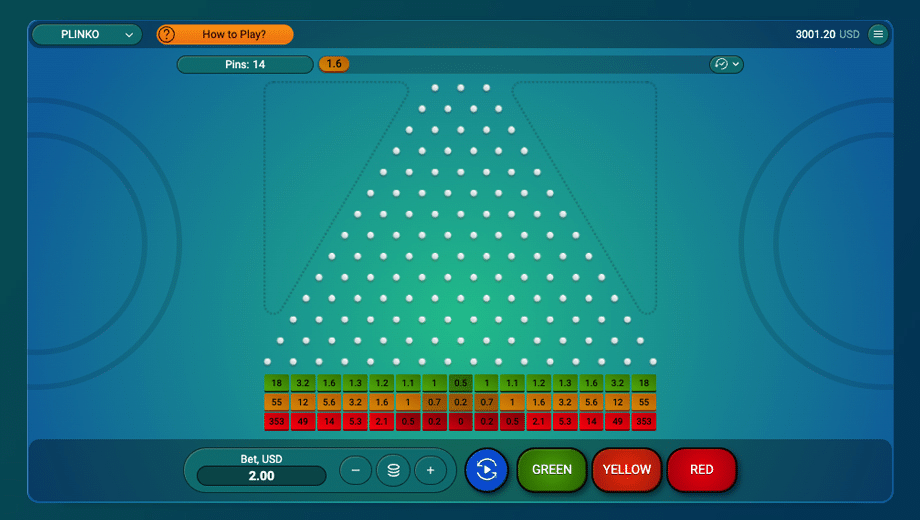
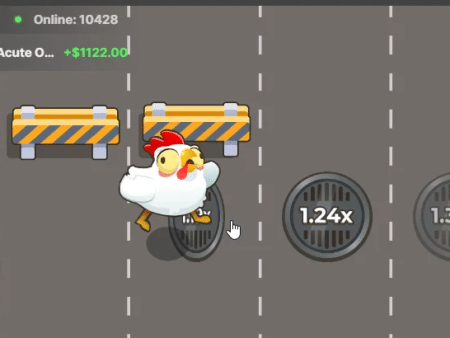
These instant win arcade games look more like mobile games and less like gambling. Plinko drops a ball onto a peg board, with various payouts displayed along the bottom row. The player’s objective is to allow their ball to drop into one of these payout slots. In Mines, the player clicks tiles in a grid while trying to avoid hidden mines. The larger the grid of safe tiles clicked, the higher the possible payout. Chicken Road (and numerous variants) allows the player to walk their character across multiple lanes, with the payout multiplier increasing with each successfully navigated lane — all the way up until the player decides to cash out or encounters a lane that terminates their run.
Despite vastly different graphical representations, each of these titles follows the exact same underlying structure: you select your desired risk level (typically low-risk/medium-risk/high-risk or something similar) and that selection defines both your odds and the payout curve for that particular round; once selected, an RNG instantly determines the outcome of your play session. Although the choices made during each round — e.g., which tile to click, whether to continue walking — seem like actual decision-making choices, they are ultimately determined by pre-programmed rules established by the developers and cannot be influenced or predicted.
Virtual Games
All the components of a virtual horse race, virtual football match or virtual dog racing look just like a live sporting event, however none of the events are occurring. Each round is generated using an RNG at the start of the round and then presented visually. The Visual presentation of a virtual event is obviously designed to mimic the look and feel of a real sporting event. This format lends itself to an endless loop of virtual events, since they do not need to wait for real fixtures to occur. Therefore, for those looking to select a winner and read form while experiencing the excitement of an unfolding result, virtuals offer this on demand.
Because of their similarity in visual presentation to real sport, many users will view their selection process based upon the visual similarities presented by real sport. Therefore, selections may be made based upon factors such as ‘the home team’, ‘the form of the team’ or ‘the recent performance of the team’. However, as noted above, virtuals do not possess any identity between rounds.
Each round represents a new independent occurrence and previous performances do not influence future occurrences.
What RTP and volatility mean in games that pay real money
RTP indicates the amount of money staked on a game that ultimately finds its way into the pockets of players, spread out over a million plus rounds. If a game has a 96% RTP, this means that 96% of all money staked on the game will eventually find its way into the pockets of players, leaving 4% for the house’s built-in edge. The 4% house edge isn’t distributed equally among players either — it’s an overall figure spread out over an enormous amount of money. In other words, you might play 50 rounds and end up up Kes 3000 or down Kes 1000 and both scenarios would fit perfectly into a 96% RTP game. Overall, RTP provides insight into the long-term structure of a game rather than individual experiences from night-to-night.
The second factor is volatility (also referred to as variance). While RTP describes the long-term trend of payouts in a given game, volatility explains how unevenly paced these payouts tend to be. Low-volatility games make frequent payments but typically in relatively small amounts. As a result, player balances move gradually with infrequent wild swings. On the flip side, high-volatility games (which can also be thought of as “high-risk”) rarely reward players but when they do, the rewards are much larger. Two games can potentially have the exact same RTP and yet provide entirely different gaming experiences due to differences in volatility — volatility dictates how erratic your journey to winning will be.
Frequently Asked Questions
Are games like aviator, plinko, and chicken road legal in Kenya?
Yes, when hosted by a licensed betting operator in Kenya. The BCLB (Betting Control and Licensing Board) licenses operators that host instant-win type games like Aviator and Plinko. The legitimacy of these types of games lies not with their legality per se — but rather with whether they’re being hosted by a license-approved operator.
Will I actually be able to win real money using these games or is it just rigged?
Although instant-win style games do contain a built-in house edge (this is reflected in RTP), they are certainly not scams provided that the online operator offering them is properly licensed and utilizing games produced by an audited and tested third party.
Which game has the best odds?
Since RTP varies depending on the game title and developer, comparing RTP values between different categories of games doesn’t always yield accurate results. A Plinko game developed by one company and a Crash game developed by another company can both have virtually identical RTP percentages — even though their gameplay mechanics differ dramatically.
I’m Kanyi Muturi and am from Tabuga, a small village in Nakuru. I have been following all sports since I was a kid and have been interested in the gambling side of sports since I was in high school. It took me a little while to get a grasp on all of the different gambling terminology and understand how confusing and complicated it can all seem when you first start.
Are you a professional gambler?
I am a successful gambler. But make no mistake about it: I’m a long-time recreational sports bettor. I’m not a professional gambler. I’m not claiming to be a professional gambler. I’ve never, to my recollection, even been acquainted with a professional gambler. And far be it from me to make the preposterous claim that following my advice will turn you into a professional gambler. It ain’t about that. Not here it ain’t. I just want to teach you a new form of recreation, a fun new pastime in what can sometimes be an unfun life.